Enhanced Metrolink Rail Service Project
Heading2
Heading3
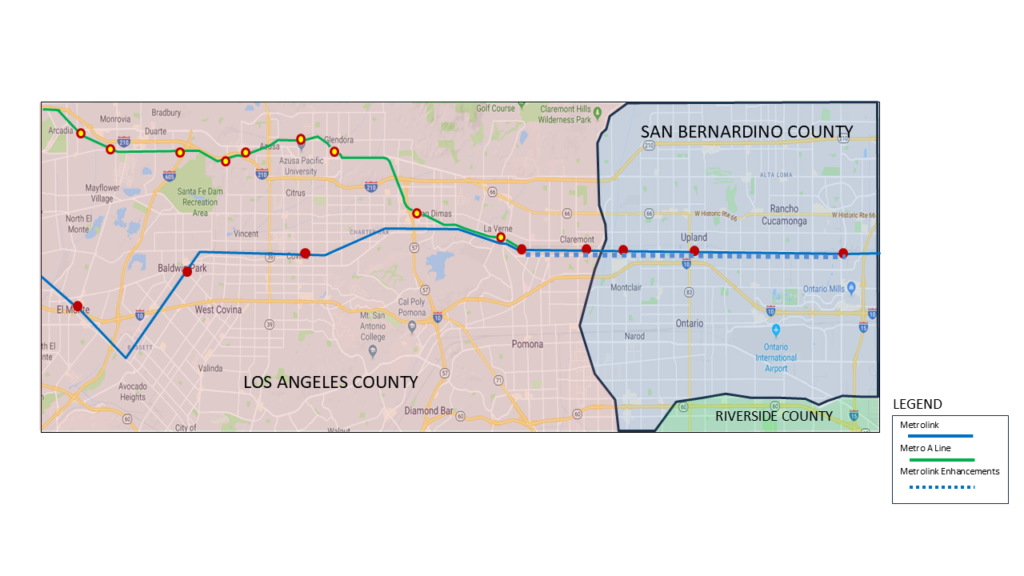
The San Bernardino County Transportation Authority (SBCTA) is advancing efforts to expand regional rail connectivity and improve service reliability along the Metrolink San Bernardino Line. To support these goals, the SBCTA Board of Directors has authorized moving forward with project development activities needed to ultimately develop a dedicated Metrolink Passenger Train Service between the Rancho Cucamonga and Pomona-North stations.
Metrolink has implemented 30-minute peak service between Los Angeles Union Station and Montclair, and additional 30-minute all-day service between Los Angeles Union Station and Downtown San Bernardino is anticipated by 2028 as part of Metrolink’s SCORE program. Building on this progress, SBCTA is exploring ways to further enhance mobility for riders in the West Valley.
To achieve more frequent and reliable service, SBCTA is advancing planning efforts to implement dedicated 30-minute passenger train service operating between Rancho Cucamonga and Pomona-North stations. When combined with Metrolink service, this approach could provide trains every 15 minutes within this segment. The passenger train could utilize potential Zero-Emission Multiple Units (ZEMUs), supporting SBCTA’s commitment to cleaner and more sustainable transportation solutions.
The proposed project includes several infrastructure improvements needed to support frequent and efficient operations. These improvements may include:
- New turnaround tracks at Rancho Cucamonga and Pomona-North
- Approximately 4.6 miles of additional double track
- Upgrades at up to a dozen roadway-rail crossings
- A potential new bridge over Cucamonga Creek
- Station area improvements at Upland
The estimated cost for the passenger train service concept is approximately $150 million, with an anticipated six‑year timeline for design and construction. Initial analysis indicates the project may meet requirements for streamlined environmental review, helping to accelerate delivery.
Next steps include development of the Project Study Report, which will refine the project scope, evaluate design and operational needs, and lay the groundwork for future implementation. Through this effort, SBCTA aims to expand regional mobility options, reduce travel times, and provide a more predictable and convenient rail experience for San Bernardino County residents.